Closing the Loop Through Advanced Tyre Recycling
End-of-life tyres are one of the most challenging waste streams in Europe. Each year, millions of tyres reach the end of their road life. When landfilled or poorly managed, they create long-term environmental risks and waste valuable resources.
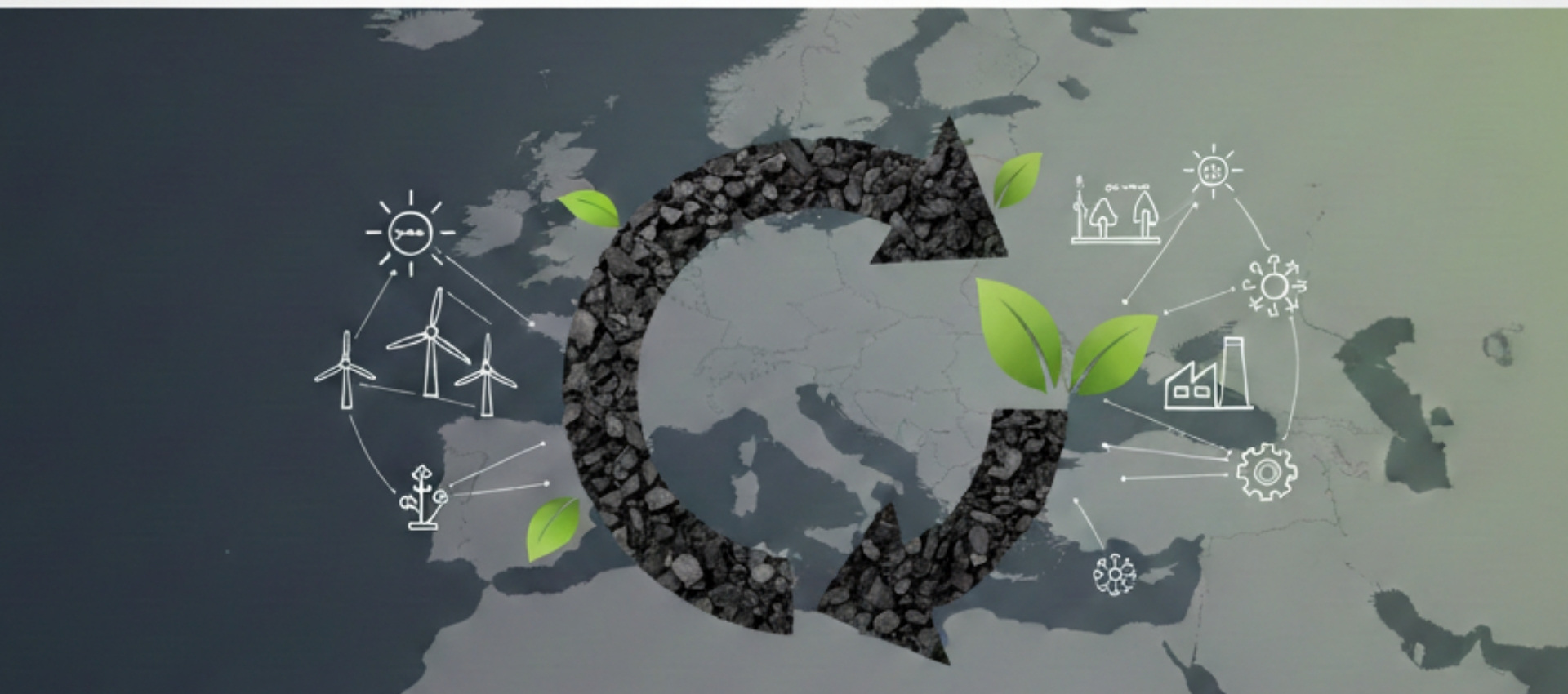
A circular economy offers a better solution. Instead of treating used tyres as waste, it focuses on recovering materials and returning them to productive use. At Gravita Europe, end-of-life tyres are processed through advanced recycling methods that support circular material flows across European industries.
Understanding the Circular Economy for Tyres
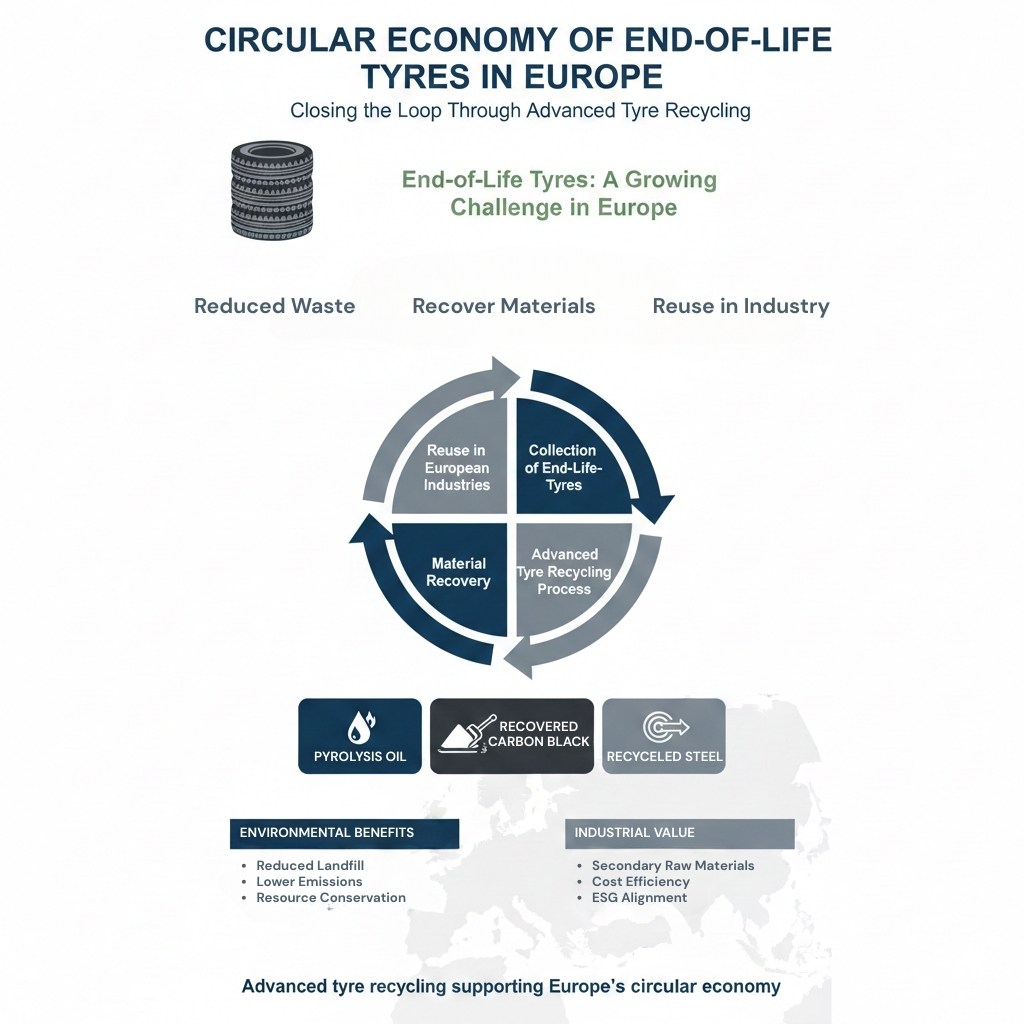
The circular economy is based on three principles: reducing waste, reusing materials, and recycling resources. In the tyre value chain, this means extending material life beyond a single use cycle.
Tyres contain rubber, carbon, and steel that can be recovered and reused when treated with the right technology. Circular tyre recycling ensures these materials remain in circulation instead of being lost to landfill or low-value disposal.
Role of Advanced Recycling in Circular Tyre Management
Not all recycling delivers the same circular value. Advanced recycling technologies allow deeper material recovery and higher-quality outputs.
At Gravita Europe, end-of-life tyres are processed using controlled thermal recycling methods that break tyres down into reusable material fractions. This approach enables the recovery of:
- Pyrolysis oil
- Recovered carbon black
- Recyclable steel
These outputs can re-enter industrial supply chains, supporting a closed-loop system for tyre-derived materials.
Circular Value of Recovered Materials
Pyrolysis Oil in Circular Energy Systems
Pyrolysis oil derived from waste tyres can be used as an alternative industrial fuel or further refined for energy and chemical applications. Its use helps reduce reliance on virgin fossil resources.
Recovered Carbon Black in Manufacturing
Recovered carbon black is used in rubber and plastic applications, replacing virgin carbon black and lowering the carbon footprint of manufacturing processes.
Steel Recovery and Reuse
Steel extracted during tyre recycling is recycled back into the metal industry, supporting circular steel production and reducing energy-intensive primary steelmaking.
Environmental Impact of a Circular Tyre Economy
A circular approach to end-of-life tyres delivers measurable environmental benefits:
- Reduced landfill dependency
- Lower greenhouse gas emissions
- Conservation of natural resources
- Improved control over tyre waste management
Processing tyres within Europe also shortens supply chains and reduces transport emissions.
Economic and Industrial Benefits
Circular tyre recycling is not only an environmental solution, but also an economic one:
- Stable supply of secondary raw materials
- Cost efficiency for manufacturers
- Alignment with European sustainability and ESG targets
- Job creation in recycling and processing sectors
By integrating recycled tyre-derived materials, European industries strengthen both resilience and compliance.
Supporting Circular Economy Goals in Europe
European policies increasingly promote circular material use, resource efficiency, and responsible waste treatment. End-of-life tyre recycling plays a critical role in achieving these objectives.
Gravita Europe’s operations in Romania contribute to Europe’s circular economy by converting tyre waste into valuable materials that support industrial production and sustainability goals.
Moving Towards a Closed-Loop Tyre System
The future of tyre management lies in closing the loop. By recovering materials from end-of-life tyres and returning them to industry, circular systems reduce waste and improve resource efficiency.
Through advanced recycling and material recovery, Gravita Europe supports a practical, scalable circular economy for tyres in Europe.